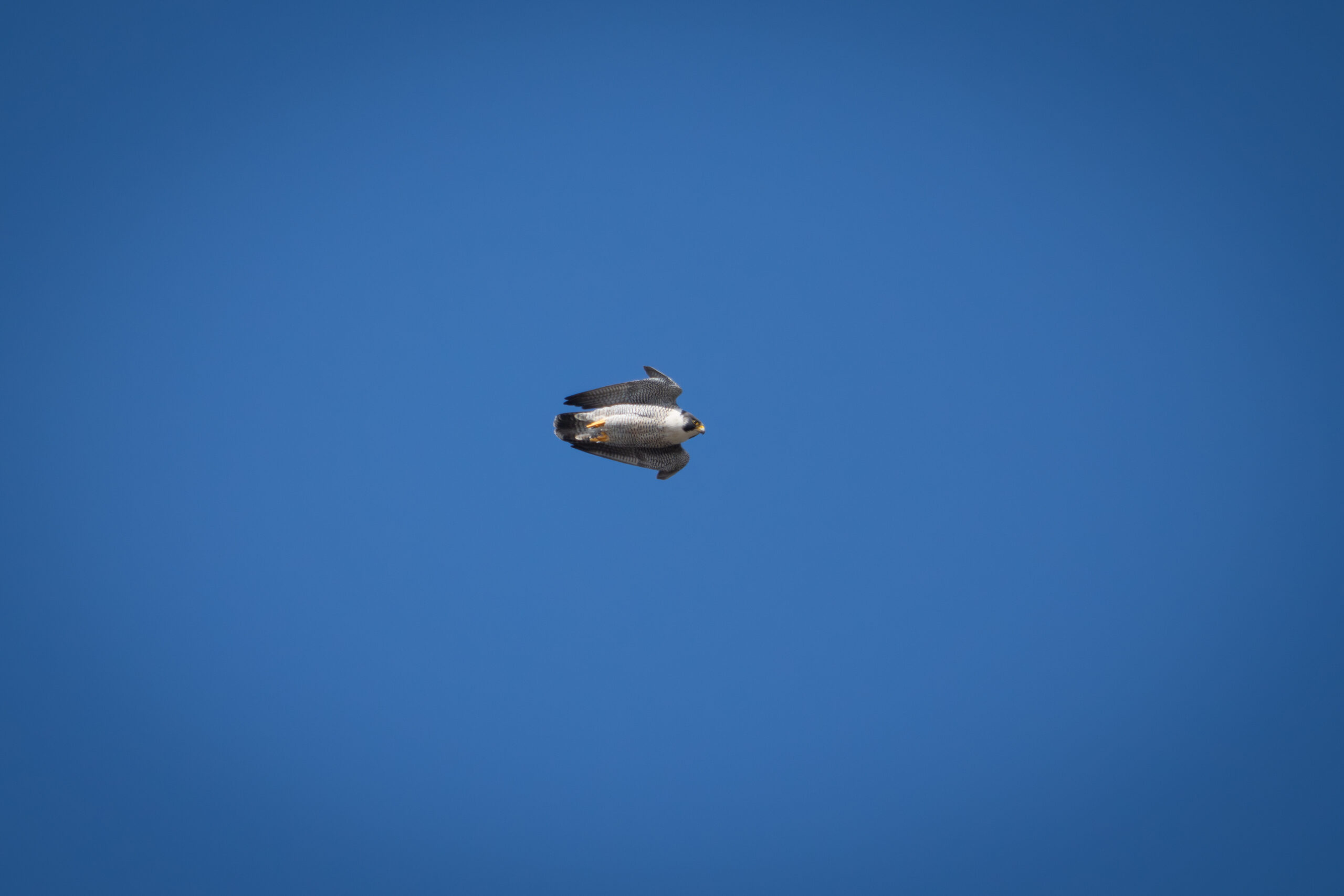
We are investigating territorial defense behavior against intruders at the nesting site of a breeding pair of Peregrine Falcons.
- ハヤブサのつがいが巣営する場所でテリトリー侵入者への防衛行動を調べています。
Observation Date: 2026-03-16Weather: SunnyWind: NW1m/sTemperature: 5°C
8:05 Start time 観察開始
One Peregrine circling overhead; a second individual appeared and joined the circling.
- 1羽上空を旋回していた後、2羽目も現れて同じように旋回している。
8:09 Black Kite (~246 m) and Osprey (~196 m) circling overhead; the Peregrines showed no alarm and departed to forage.
- さらに上空をトビとミサゴがそれぞれ旋回(トビ:246m)(ミサゴ:196m)ハヤブサは特に警戒することなく餌探しへ行った
8:17 Two Black Kites (~252 m) passed overhead; Peregrines absent.
- トビ2羽上空(252m)通過。ハヤブサは不在
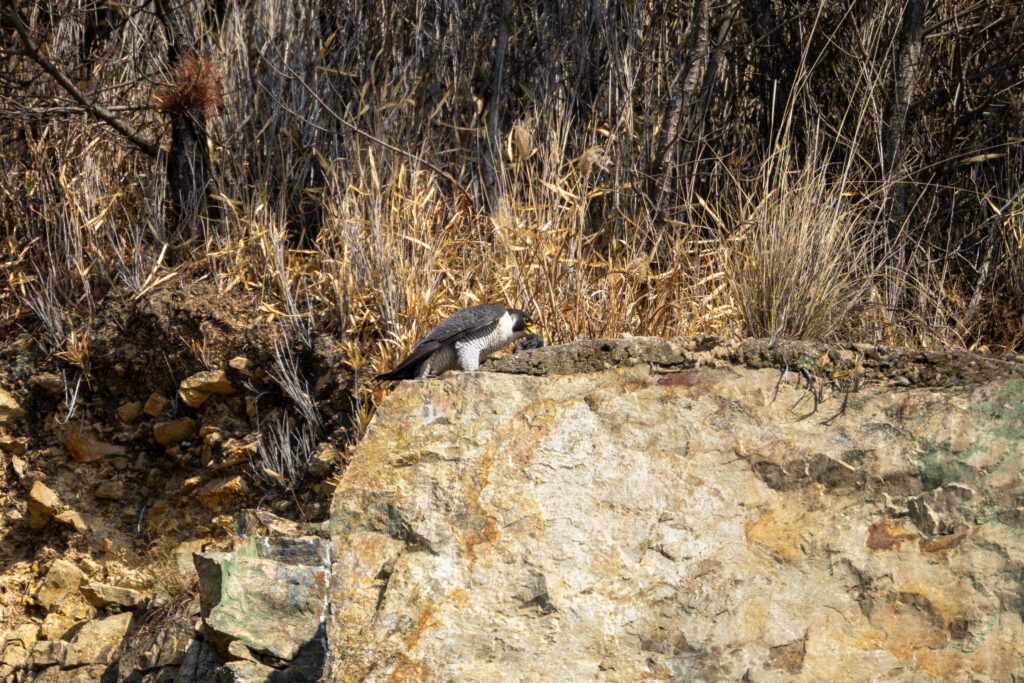
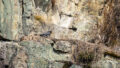
8:23 One female returned, perched on the cliff above the nest, and fed on a Brown-eared Bulbul.
- 1羽戻り(メス)巣の上の崖にとまり持ち帰った餌を食べる(餌はヒヨドリ)
8:50 The Peregrine circled slowly at ~300–450 m altitude for several minutes.
- かなり上空300-450mをゆっくり数分間旋回している
9:40 Another Peregrine (a third individual) entered the territory, and the male returned simultaneously.
- また別個体、第3のハヤブサが侵入、オスも一緒に戻ってきた
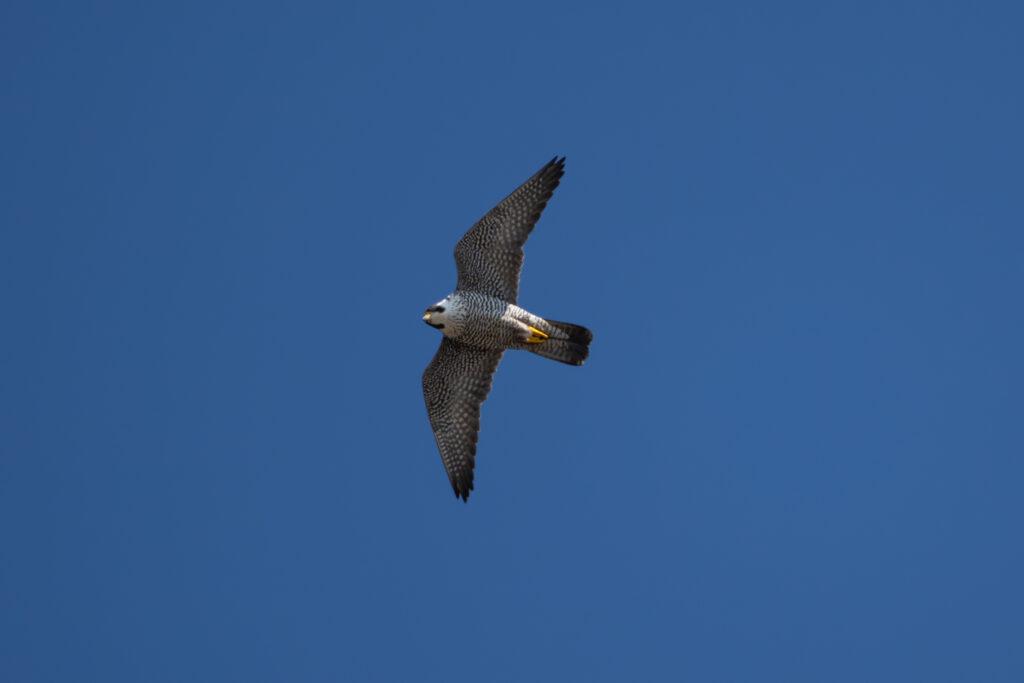
- 縦斑が目立つ。前回の3/10に現れたのと同一個体(顎下に濁りがある)
The male returned together with the intruding Peregrine.
It was unclear whether he was following the intruder or being drawn toward it.
No clear chasing behavior was observed.
- オスが一緒に帰ってきてるのが気になる。誘っているのか誘われているのかどっちだろう。追い出すように飛行しないのが気がかりだ。
10:07 Copulation observed; the male entered the nest, while the female remained on the cliff.
- 交尾した。その後、オスは巣に入るがメスは崖上から動かない。
10:25 The female entered an old nest.
- メスが古い巣に入った。
11:00 Observation ended. 観察終了
Summary(まとめ)
A third Peregrine Falcon, apparently a female, entered the territory again today. Copulation between the resident pair was also observed, making the observation particularly interesting.
Egg-laying and incubation should begin soon. My current expectation is that the pair may use the older nest. This impression comes from repeated observations of the female inspecting the old nest. She has also been seen perching on a branch within that nest, which appears to be a favored spot.
The answer should become clear in the near future.
- 今日も3羽目のメス個体が侵入していた。そしてペアのメスと交尾もあり、観察し甲斐があった。もうそろそろ産卵・抱卵と進むはずだが、私の予想は古い巣で行うのではないかと思う。理由はメスが古い巣内を物色している姿を連続して見かける。そして巣にある枝に留まるのだが、そこを気に入っているようにも見える。答えはもうすぐわかるだろう。
コメント